taqelah! Testing Conference 2027

South East Asia's premium & affordable testing conference

Matrix @ Biopolis, Singapore

Workshop Thursday, 4 March 2027
Conference Friday, 5 March 2027

–

Days to go

Early bird on sale now

Ends 15 January 2027

  • Conference

    S$100S$120

  • Full day workshop

    S$219S$239

  • Half day workshop

    S$119S$139

Get tickets

Speakers

15 speakers from 7 countries

Next stop: Singapore. We are announcing the line up one speaker at a time: get the news first.

Conference day · Friday 5 March 2027

One day, one stage, every session

Two keynotes and eleven talks, all on testing in the age of AI. We are revealing the speakers one by one: get the news first.

Times may shift slightly

  1. Keynote Reduce the Noise, Improve the Signal Bas Dijkstra · Test automation consultant & trainer

    What decisions are you comfortable making based on your test results? Teams spend a lot of time building and maintaining test automation, yet the tests are slow and brittle and nobody trusts the feedback. Vanity metrics such as code coverage, test count, execution time or “following the test pyramid” say nothing about the quality of that signal.

    Bas covers models, techniques and tools to improve the quality of your test feedback: asking better questions, and using the test automation quadrant to assess where your feedback stands today and plan your next steps.

    About the speaker

    Bas Dijkstra is an independent test automation consultant and trainer with almost 20 years in the field, working on testing and automation solutions across a wide range of programming languages, frameworks and technology stacks. He has delivered test automation training to dozens of companies and hundreds of conference attendees, and he is the developer of RestAssured.Net, a library that makes writing tests for HTTP APIs in C# a breeze.

  2. Talk Stop Reporting Test Metrics to an AI-Age Business Brijesh Deb · Principal Consultant, Infosys

    Every testing team reports metrics: pass rates, coverage percentages, defect counts. When AI is generating outputs, adapting behavior or making decisions inside the product, the gap between those numbers and real quality gets harder to paper over. A high pass rate on a system with a malfunctioning recommendation engine is not evidence of quality. It is evidence that we tested the wrong things very thoroughly.

    Brijesh shares a practical model for shifting the quality conversation from testing activity to user outcomes: a mapping exercise that connects quality signals to business outcomes, with metrics worth adding to your reporting, such as feature retention after release, task completion drift, behavioral variance across model updates, and the places where users stop and don’t come back. He also shows how to run it alongside your existing test reporting, and how to make the case to leadership without being dismissed as the person who wants to stop measuring.

    You leave with a starting set of outcome metrics, a mapping model, and the argument you need to have this conversation in the room.

    About the speaker

    Brijesh Deb is a quality engineering leader with more than 25 years in software testing, AI and Agile transformation. He is Co-Founder and Chief Enablement Officer at The Test Chat and Principal Consultant at Infosys. Known for his systems thinking and context-driven approach, he shares his views on testing, leadership and AI on LinkedIn, Medium, his podcast TesterSpeak and at conferences, and mentors testing professionals around the world.

  3. Coffee break
  4. Talk Green Builds, Silent Killers: What AI-Generated Tests Never See Speaker to be revealed

    AI now generates tests in minutes, from code, from user stories, even from Figma. Coverage climbs, pipelines go green, and teams feel safe. But AI-generated tests share one blind spot: they test what was specified. The silent killers live in what wasn’t: the retry that charges a customer twice, the error, empty and loading states nobody designed, the visual baseline captured from a buggy first build that locks the bug in as “correct”.

    This talk names the failures AI test generation consistently misses and shows how to close the gap without slowing delivery: why rising coverage can mean rising risk, a pre-generation risk-mapping step your team can adopt on Monday, how to test your AI’s tests, and which metrics prove quality beyond test count.

  5. Sponsor talk Title to be announced Sponsor session
  6. Talk From Bottleneck to Builder: Scaling Quality When AI Writes the Code Kunal Ashar · Staff Software Engineer in Test, 8x8

    AI can speed up code generation. It doesn’t automatically speed up delivery. If testing still depends on a handful of QA engineers, every feature joins the testing queue, and without clear requirements and team conventions, generating tests faster just adds noise.

    This talk shares four practical principles: find your bottleneck before you build; stop being the gate and build the guardrails; rules first, AI second, so AI agents follow team conventions instead of guessing; and fix your foundations, because faster code just waits longer for a shared environment. They come from a two-quarter rollout across six teams, where average feature cycle time fell from 20 days to 6.3 days with no increase in customer-reported issues.

    About the speaker

    Kunal Ashar is a Staff Software Engineer in Test at 8x8 with over 12 years in software testing and quality engineering. He focuses on scaling quality across teams, treating it as a way of thinking rather than a phase in the delivery cycle, and leads AI and agentic engineering initiatives that speed up testing without replacing engineering judgment. He has coached over 1,000 testers, developers and engineering managers, and speaks at online events and community meetups.

  7. Lunch
  8. Talk Hire the Builder, Keep the Director’s Chair Santhosh Tuppad · Security testing practitioner, ONDSEC

    AI is the shiniest teammate we have ever had. It builds fast, never sleeps, and will happily build the wrong thing with total confidence. So who decides what is right? You do.

    Using real examples from testing work, this talk shows where AI genuinely speeds things up and where it quietly goes wrong, and why the difference comes down to understanding built through slower, older habits: reading books, source documentation, RFCs and W3C specifications. You leave with a simple way to split work between director (you) and builder (AI), a practical method for reading specs as a tester, and renewed confidence that fundamentals are still the best investment in the age of AI. No AI expertise required.

    About the speaker

    Santhosh Tuppad is a software tester and security testing practitioner with over 15 years of experience. He has spoken at conferences around the world, delivered keynotes and run security testing workshops across the globe. He works with AI every day as a team member, where AI builds and he directs, and he champions old-school learning: books, documentation, RFCs and W3C specifications. He shares practical lessons with a good dose of humour, so testers of all levels leave sharper and more curious.

  9. Talk Cognitive Quality Engineering: Debugging Human Thinking in the AI Era Pricilla Bilavendran · Team Leader, Billennium IT Services

    Testers increasingly rely on AI-generated test cases, code reviews, defect analysis and risk assessments. Yet humans often over-trust automated systems, while AI models can inherit biases from the data and decisions that created them. The result is a feedback loop where flawed assumptions scale faster than ever.

    This session explores how cognitive biases shape test design, defect discovery, risk assessment and trust in AI output, and offers practical mental models for questioning assumptions and uncovering hidden risks. It bridges psychology and engineering to answer one question: in a world where AI can test software, who tests the thinking behind it?

    About the speaker

    Pricilla Bilavendran is a quality engineering leader with over 15 years of experience, currently at Billennium IT Services, with deep technical expertise across functional, EDI, ETL, automation and API testing. Agile Testing Days recognised her as one of the “100 Women in Tech to Follow and Learn From”. She is a dedicated advocate for diversity and inclusion and shares her insights through webinars, workshops and mentorship.

  10. Talk Quality Is Everyone’s Responsibility, Even in an Agentic Team Wong Ken Sng · Senior QA Engineer, Autodesk

    In one team’s experiment, a developer used AI agents to run a kind of “micro-SCRUM” while building a feature. By the time QA got involved, an AI-generated QA plan was already waiting to be executed. On paper it looked structured and comprehensive. In practice it was exactly the downstream handoff that shift-left is meant to prevent, and simple exploratory and monkey testing quickly found gaps the plan had missed.

    This talk shares the lessons from that experiment: why a reasonable-looking AI QA plan still missed important risks, and why early tester involvement, shared context and collaborative risk discussions matter even more in agentic development. AI should strengthen a team’s quality practices, not become a new wall between development and QA.

    About the speaker

    Wong Ken Sng is a Senior QA Engineer at Autodesk in Singapore, with more than 13 years in software quality assurance, testing everything from Linux drivers all the way up to GUIs. Away from testing, Ken likes to read, work out and cook.

  11. Talk I Automated Myself Reifa Tangon · SQUADAP

    In early 2025, a SaaS company made AI mandatory across every team. For QA that meant Claude for test planning, AI-assisted automation, and documentation generated through Jira. It worked. In less than a year, developers were running the tests themselves, documentation was automated, and UI/UX had absorbed the manual checks. Then the tester who made it happen was moved to frontend development, and the QA team was quietly reduced. They had automated their own role.

    The lesson wasn’t that AI replaced testing. Execution had been automated, but judgement, deciding whether software is safe enough to release, had never been claimed. Once anyone could read the reports, the release call was made without a tester in the room.

    This talk is the playbook for testers at any level who use AI, or soon will, and want to stay essential once it works. You leave with four practices to start next week: sort your week into execution, systems thinking and judgement, and see honestly how much AI could already take; automate your own execution work first, on your terms; make your judgement visible with a short release risk note managers and developers can act on; and treat community as career infrastructure. No tools to buy. Just a different way to show what testers are for.

  12. Talk Architecture & Design: The Secret Weapon for Scaling Test Execution in the Age of AI Anand Bagmar · Engineering Leader, Essence of Testing

    Most test automation suites don’t fail because of bad code; they fail because the architecture can’t handle scale. Test one business operation across several brands, markets and vendor APIs and you hit a combinatorial explosion of brittle, duplicated scripts. Adding AI code generators to that mess only generates bad tests faster.

    This case study from a large multi-brand gaming operator shows how 1,080 combinations collapsed to 15 real ones: modelling the matrix as a tree instead of a cross-product, separating business intent from wire-protocol details, and injecting coordinates at runtime. Adding a new integration dropped from days of work to under an hour, with no changes to existing tests, and the same seams keep agentic systems from drifting.

    About the speaker

    Anand Bagmar is an engineering leader, consultant and speaker with more than 25 years of experience building resilient systems and transforming quality practices across enterprises. He is the author of Essence of Testing and the creator of teswiz, an open source test automation engine that unifies web, mobile, API and canvas testing. Today he focuses on AI-enabled engineering, test architecture, and helping teams build verifiable, scalable software in the age of autonomous agents.

  13. Coffee break
  14. Talk When AI Changes Its Answer, What Do You Test? From Correctness to Trusted Behaviour Manoj Kumar · Director, NextGen Solutions, Planit

    Ask an AI the same question five times and you may get five different answers. All five sound convincing, but only one is right. For thirty years, testing meant one input, one expected output, pass or fail. AI quietly broke that contract.

    This session moves from verifying correctness to evaluating behaviour: why AI fails in predictable patterns across layers, and an evaluation toolkit you can use in practice, from reference-based metrics and semantic similarity to grounding and faithfulness checks and using AI to judge AI. Then it turns that evidence into a decision you can defend: when the behaviour is good enough to trust, and how to keep that trust as models and data change.

    About the speaker

    Manoj Kumar is Director of NextGen Solutions (AI) at Planit, where he leads AI-enabled quality engineering, with more than 17 years across enterprises, fintech and early-stage startups. His current work focuses on evaluating LLMs and AI agents in real client systems, helping organisations move from “it looks right” to evidence they can trust. He is known in the open source community for his contributions to Selenium and Appium, serves on the Selenium Project Leadership Committee, is a Distinguished Speaker of the ACM and the IEEE Computer Society, and has spoken at conferences in more than 15 countries.

  15. Talk When “Correct” Isn’t Enough: Judging Voice AI Agents Speaker to be revealed

    Voice agents break QA’s input and output contract three ways: audio input full of accents, noise and names, a non-deterministic LLM in the middle, and live conversation where pauses and interruptions are defects.

    This talk covers persona-based simulated callers, rubric scoring instead of pass or fail, latency and turn-taking as correctness, red-teaming over the phone, voice-only failures such as speech recognition drift, pronunciation, barge-in and silence, and how to tell real regressions from model variance. You leave knowing what a passing voice test means, which metrics to track from day one, and with a voice-specific bug checklist.

  16. Talk Shift-Left Testing in the AI Era: How AI Coding Agents Are Transforming the QA Engineer’s Role Speaker to be revealed

    Traditionally, QA engineers have focused on validating software after developers complete their implementation. But what if they could actively contribute to quality while the code is still being written? With AI coding agents, that shift is becoming increasingly practical.

    This session explores how AI-powered development tools help QA engineers move beyond traditional UI automation and take part earlier in the lifecycle: collaborating with developers to strengthen unit, integration and component-level tests, and finding defects closer to their source instead of waiting for them to surface in end-to-end testing.

    A live demonstration with Claude Code and reusable Skill files shows how QA engineers can guide AI coding agents to understand application architecture, analyse implementation logic and generate meaningful tests aligned with established testing practices, and how reusable testing instructions standardise test design, improve early feedback and make quality engineering a continuous activity.

    Shift-left testing is no longer just about moving testing earlier. With AI coding agents, QA engineers can become active contributors to quality throughout development, rather than waiting for a completed build to begin testing.

  17. Keynote More tests != Better software: Beyond Writing Tests in the Age of AI Shi Ling Tai · CEO, Uilicious

    What does it mean to be a QA engineer in the age of agentic coding? With AI catching bugs faster than humans and generating hundreds of tests in minutes, are we building better, more resilient software, or creating an illusion of test coverage and false confidence?

    As AI takes over the mundane work of QA, the value of QA engineers shifts beyond writing and executing tests. Shi Ling explores how QA engineers can evolve from test authors into strategic thinkers who challenge assumptions, analyse risks, and architect efficient testing strategies and systems.

    About the speaker

    Shi Ling is the CEO and co-founder of UI-licious, a tool that helps software teams rapidly test and monitor end-to-end user journeys for their web apps. She has been building web apps since jQuery, obsessing over performance and padding, and these days over testing and accessibility for the front end. She can also do kung-fu, but these days she mostly code-foo.

Workshop day · Thursday 4 March 2027

Four hands on workshops

Pick a full day, or take one or both half days, which share a room and never clash. Each is hands on: you build and test something real with the facilitator in the room.

Venue to be advised Separate from the conference venue

Full day 09:00 to 17:00

Building and Testing an API with AI

Build a working API in Python and its test suite, with an AI coding assistant as your pair. You will commit to GitHub and set up a GitHub Actions pipeline, and learn where AI speeds you up and where you still need to steer and verify.

  • Bas Dijkstra Test automation consultant and trainer

Full day 09:00 to 17:00

Appium 3.0 with MCP

A full day of hands on mobile automation with Appium 3.0 and AI powered MCP tools. Build Android, iOS and web tests from natural language prompts, write your own Appium plugin, then run tests in parallel and use MCP to analyse logs and debug failures.

  • Srinivasan Sekar Director of Engineering, TestMu AI
  • Sai Krishna Director of Engineering, TestMu AI

Half days · same room Do one, or stay for both

Book a half day ticket for each. Both together fill the day, 09:00 to 17:30.

Book one or both

Morning 09:00 to 12:30

From Zero to Evaluated: Build and Test an AI Agent in Half a Day

Build a chatbot with FastAPI and an LLM, extend it into a multi agent system with LangGraph, then try to break it. You will test for hallucinations, groundedness and correct tool use with LLM as a judge, LangSmith and DeepEval.

  • Gaurav Khurana Senior Test Consultant, Microsoft

Afternoon 14:00 to 17:30

Context Engineering for Testers

Learn to decide what an AI system should know, when it should know it, and what it should never see. Through short lessons and web based games you will build, break and repair context, and leave with your own context file and an agent file ready for handoff.

  • Rahul Parwal Senior Specialist, ifm engineering

Workshop tickets are on sale now. Get a workshop ticket

Presented by

taqelah! logo

Run by testers, for the testing community.

Brought to you by taqelah!, Singapore's most vibrant testing community.

We have been running testing conferences since 2020: see every past edition, with all 33 talks free to watch.

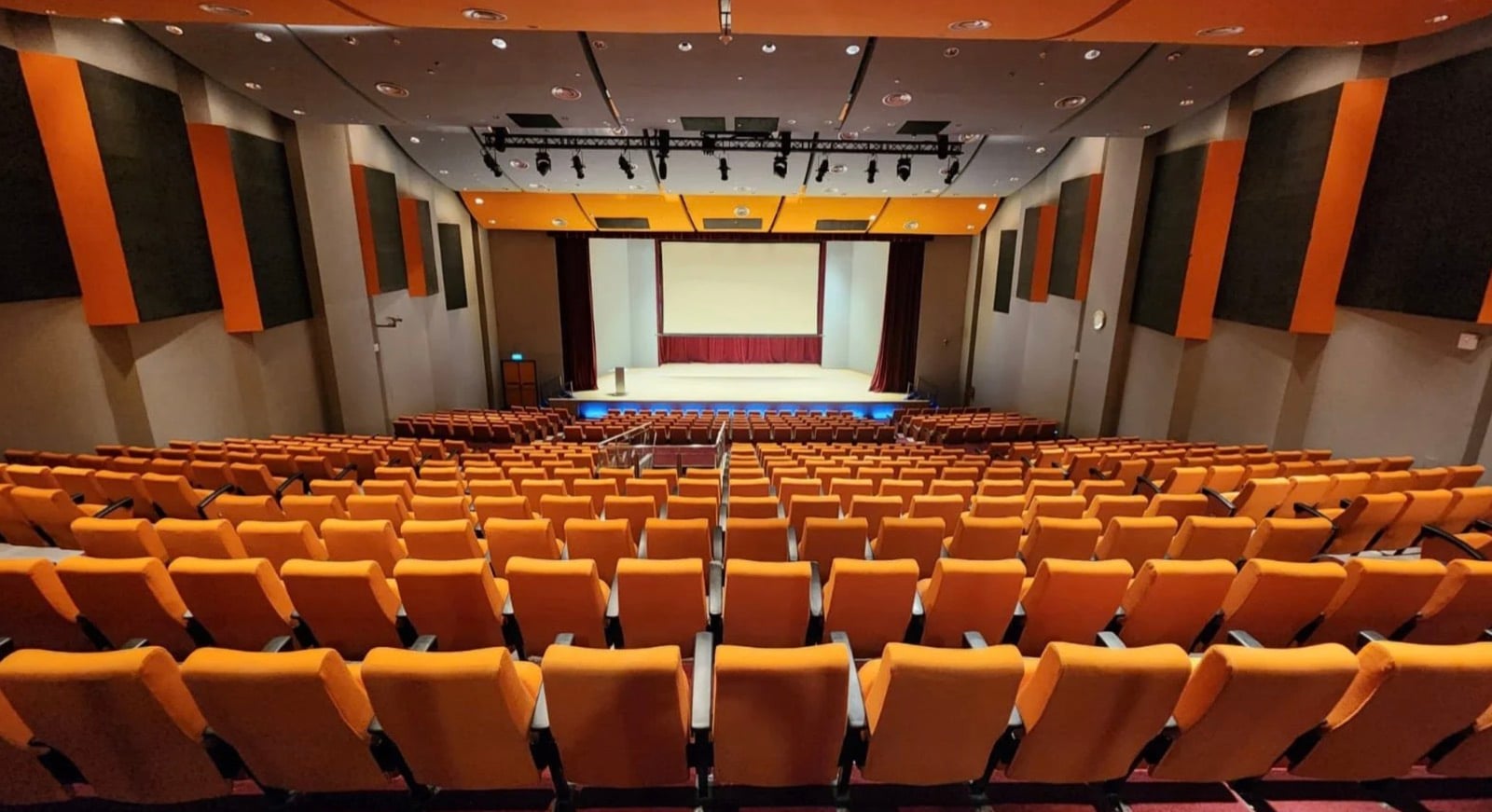
The Matrix auditorium, a tiered hall of orange seats facing a stage with a large projection screen

Conference day · Friday 5 March

Venue

480 seats, a 10 minute walk from Buona Vista MRT.

The room

Matrix @ Biopolis

Matrix, Level 2
30 Biopolis Street
Singapore 138671

A 480 seat auditorium: tiered seating, a real stage, and a clear line to the screen from every row.

Conference day, Friday 5 March 2027. The Thursday workshops are at a separate venue, to be advised.

A 10 minute walk from Buona Vista MRT, on the Circle and East West lines (CC22 / EW21).

Supported by

Partners

Official venue partner

Run a tech community? Become a community partner

Organising Team

Stay in the loop

Get TTC 2027 updates

Be the first to hear when speakers are announced and before ticket prices go up.